Christopher Hart’s blog #6: Character design tip!

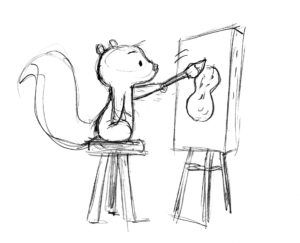
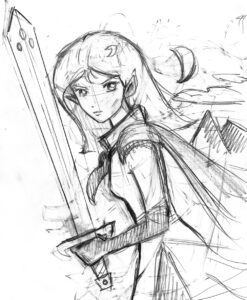
When you decide to draw a new character, your intention is to transfer what’s in your mind onto paper or tablet. But as you begin to draw, you notice that the character takes a few twists and turns and doesn’t look exactly like what you had in mind.

People make all sorts of corrections at this point – but don’t fight it. This is a good development. The character is trying to tell you that while it appreciates the starting point you came up with, it has a better idea of who it wants to be.

Give it some rein. You can always change it back later.

After all, you have an eraser and it doesn’t!
 

Christopher Hart’s blog #5: Do you think like a cartoonist?

  1. Do you make faces while drawing a character’s expression?
  2. Do you go through angst about changing a drawing even though you know it needs it?
  3. Do you add personality to your characters by changing the hair, pose or clothes?
  4. Do you focus expressions on the eyebrows rather than on the eyes?
  5. When you reassess a drawing, do you imagine what your character might be thinking?
  6. Do you try to keep a group of characters within a consistent style?


If you answered “Yes” to any of these questions, you’re exhibiting artistic traits well above the average hobbyist. You, my friend, are a cartoonist! 


Christopher Hart’s blog #4: Don’t like what you’ve drawn? You may be looking in the wrong place.

It’s good not to like everything you draw. Really. People who love everything they create have often missed an opportunity in their drawings. Being self-critical isn’t a character flaw, it’s an asset. The musing, “I like it, but I wonder if it could be better?” is a helpful attitude to have as you assess your work.

Let’s say you get an idea how to make a drawing more effective. Great, but then you realize that it would require changing the whole thing. What do you do? You redraw the whole thing. Every time. (But keep the original in your files.) No one has looked back at their drawing and said, “I’m glad it didn’t make it as good as it could have been.”

Christopher Hart’s blog #3: Stuck? Here’s how to get un-stuck!

The Stuck Fairy will land on everyone’s desk. So don’t freak. The impulse many people have is to take a break to clear their minds. You might feel better that way, but a mind cluttered with ideas and concepts is teeming with possibilities. Creativity is dynamic. It’s closer to agitation than to relaxation.

When you hit a creative wall, don’t stop. Break through it. Throw everything you’ve got at it. Rearrange your ideas. Juggle them. Force them to give up their secrets. Professional artists and writers know that creating is work. And if the answers don’t come right away, draw or write anything. Just roll the ball forward and your brain will probably follow.

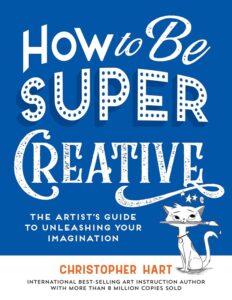
For more on this subject, check out my book “How to Be Super Creative”, which is available on Amazon.


CHRISTOPHER HART’S CORNER
Drawing, character design & more

A new blog every Monday morning

Christopher Hart’s blog #2: Avoiding mistakes when you draw

As beginning artist, you may believe that it’s bad to make mistakes. Alternatively, you may have been told that it’s impossible to make a mistake (cough, cough!). Let me give your creative brain a quick, adjustment: You’re not making too many mistakes. If anything, you’re probably not making enough of them.

Your rough sketches that fell a little short can actually be quite useful. They can provide you with more choices when you clean up and finish your drawing. The initial sketch is the time for experimentation. The clean-up version is where you edit and refine. Don’t get to the editing stage too soon! And remember this: the people who make the most mistakes are experienced artists.


See you next Monday!

CHRISTOPHER HART’S CORNER
Drawing, character design & more

A new blog every Monday morning!


Welcome to my first blog!

Hey, this is my first blog about drawing and all things related. One of the great pleasures of drawing, and an essential skill, is to create your own characters in a way that grabs the viewer’s attention. But how do you do it? Usually, it begins with a general idea, like this:

Bear / forest

Or, you might even get more specific, like:

Bear / forest / smiling

That’s a good start. But don’t begin the drawing just yet. Those prompts don’t go far enough. We don’t know if the bear will be cute, or evil, or lumbering, or sleeping. Let’s go from the general to specific, like this:

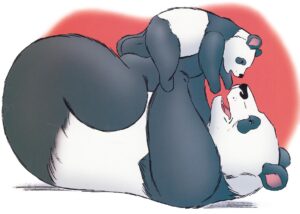
Bear / playful / add a second bear / a cub / emphasize the eye contact.

Now you’ve given yourself a roadmap so it’s easier to stay on target, and it’s an appealing subject. The more specific you get about what you intend to draw, the more successful the character will be.


See you next Monday!