by Christopher Hart | Sep 28, 2015 | Tip of the Week
 Welcome to my new Art Tip of the Week Series!
And my second Art Tip of the Week is:
Art isn’t about your ability to feel what you draw, but about your ability to produce a feeling in the viewer.
Come back each week for new art tips! And if you have any questions, head on over to my new interactive FAQ page.
by Christopher Hart | Sep 21, 2015 | Tip of the Week
Welcome to my new Art Tip of the Week Series!
And the first tip to start us off is:
If you don’t believe in yourself, why should anyone else?
Come back each week for new art tips! And if you have any questions, head on over to my new interactive FAQ page.
by Adalberto | Sep 12, 2015 | Blog old
Many people in the world think that drawing skills are just a talent you have by nature. Probably, natural-born designers will agree with this statement, but as a matter of fact anyone can learn to draw better and to refine their personal drawing skills.
Designers who work on manga take classes and specific courses in order to learn more and become successful designers – which increases their chances to get a solid job opportunity within an important studio.
Follow These Tips!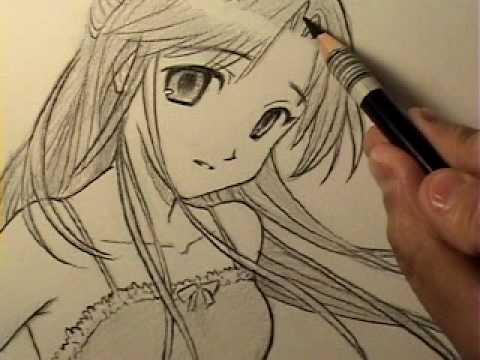
Beginners may feel they have to study a lot and improve for years before to be able to draw appreciable manga characters. Here is a list of precious tips for you that will help you understand more about drawing manga:
- Study real human anatomy to draw bodies in movement
- Use guidelines and trusted references
- Avoid to copy your favorite designer, try to add something of yours in drawing
- Criticism helps growing
- Stay openminded, you don’t have to express your personal thoughts through your characters
- Have fun and don’t feel discouraged
- Exercises should never miss your daily routine
Manga And Video Games
For many reasons, manga share a common series of elements with video game, another very flourishing industry of these years. For example, both may use human characters as well as animals or fantastic characters.
Another thing is that video games may be inspired to cartoon / movie characters and, therefore, represent a sort of continuum of such characters within a different entertainment form, the one of video games, online games and casino games.
Casino Games – The Parklane Casino Experience
Slot games are the most popular games when it comes to themed games, inspired to certain movies or even cartoons. Slots are full of imagination, colored and extremely unique. The world of a single slot game may resemble a manga story in a particular close way – in fact, certain manga designers sometimes switch to the casino game industry.
Parklane Casino is an excellent example of how slots can take players into just another world, completely engaging, whimsical or thrilling.
The experience at Parklane Casino wouldn’t be complete without its generous ParkLane Casino bonuses and its monthly promotions. Moreover, at Parklane Casino players who are VIP members can enjoy extra benefits from their special status, including more bonuses and a unique game palette.
A Special Welcome At Parklane Casino
The operators of Parklane Casino put much care in making their casino environment be a really enjoyable place for everyone, considering how different each casino player may be than all the others!
It’s an ambitious goal, but as far as we can see Parklane Casino is going pretty well, gaining numerous enthusiast players with each day.
The welcome offering will surely give unsure players a more reason to consider Parklane Casino as their ultimate choice:
- A special bonus of 200% up to the value of €2,000
- Extra 15% payment method bonus for using one of the selected methods (GiroPay, PostePay, Sofort, Neteller, Skrill)
- Monthly bonuses on certain games
- Free spin bonuses (timelimited offerings, so you’d better check the casino’s site to see which bonuses are currently available)
The casino calendar of Parklane Casino includes even more special promotions and rewards!
by Christopher Hart | Oct 11, 2014 | Blog old, Ruminations
My report on the New York Comic Con:
Practically everyone came in costume. I’ve never seen so many flabby Spidermen before. Parents brought their little kids, and it was the parents who wore the costumes! I wore a Polo shirt and slacks, and therefore, I stuck out like a sore thumb.
The main floor had fewer interesting booths from publishers and media companies than previous Comic Cons, but the Artist’s Alley work was superb, although the styles were pretty homogenous. There were many artisans selling cool and inventive crafts they created themselves. But the ubiquity of used comic book sellers overwhelmed some of the more interesting aspects of the show. I signed about a million books and my hand fell off, so I had to sign the rest using my teeth. Well, kind of.
They had screenings on the lower level, and lines were not too bad. It was jammed, but once again, the people were extremely polite. The food was…well, let’s just say that I opted for a medium cup of nonfat frozen yogurt, and was charged $9. I almost spent my daughter’s college tuition on lunch.
It was sold out before it even opened, so if you’re planning to go next year, be absolutely sure you buy a ticket EARLY. That’s all from your intrepid reporter!
by Christopher Hart | Sep 9, 2014 | Blog old, Cartoons
There are two ways of creating a new character from one you are copying from a how-to-draw book. A combination of the two methods works really well. Unfortunately, most people only use method #1, and therefore, they don’t really achieve a unique character. I’ll explain both methods:
Method #1: Adding, Subtracting & Altering
This method is simple. If an established character has a beard, leave it off. Change a hairstyle. Give her glasses, or conversely, if the character already wears glasses, take them off. Change her expression. Give him a theme for his clothes, e.g., retro 60s style. This is all great stuff; it will give your character a specific look. But the underlying character will look the same.
Method #2: Core Changes
Now we move onto the basics of the character: the thing that makes the character what she is, regardless of costume of “extras.” Make the following changes one at a time. Don’t do them all at once, or you’ll get lost:
- Change the age of the character by at least 5 years
- Change the basic personality of the character, e.g., the “popular” girl into a brainy girl
- Change the height of the character, and as a result, the proportions
- Change the basic body type: thinner, heavier, curvier
- Add a quirky feature that dominates the face, for example, a large nose, or tiny eyes spaced far apart, or a large chin, etc.
You may only need to do one or two of method #2, combined with some items from method #1. But these should work for any and all characters. Be sure to show the original and your new character to a friend, and get their opinion on whether it looks original.
by Christopher Hart | Aug 31, 2014 | Blog old, Ruminations
Inertia. Sir Isaac Newton first defined it in the 1700s. Most of us think of it as the phenomenon that an object at rest tends to stay at rest. For artists, that means it’s often difficult to start a new project – especially a big project.
But few people remember the other half of the definition: a moving object will remain in motion unless affected by another object or force. Ah ha! Therefore, that means once you start on your project, you tend to keep working on it. The problem is then, elementary, my dear Watson: How to get started writing in the first place.
Most of us think of a project as a big mass of effort. Take a graphic novel, for example. It’s 180 pages of drawings & text. How does anyone start in the face of such a daunting undertaking? However, no one “draws and writes” 180 pages all at once. There are stages to the process, and each one is eminently do-able.
Stage I: Roughing out the character designs
Stage II: Creating the outline
Stage III: Writing the story
Stage IV: Illustrating the pages
Taken one at a time, each stage is fun to do, and limited in duration. Therefore, set smaller goals for yourself. You’ll be more organized, and most important of all – you’ll get started!
Hope that’s been helpful!
by Christopher Hart | Aug 16, 2014 | Blog old, Ruminations
Every artist, sooner or later, has artist’s block. What to do? You could wrap a cord around your head, pull it hard, and hope to squeeze some ideas out of your brain. But that doesn’t work, and often results in a really bad case of “forehead rope burn.” The old adage, to stop working and do something to take your mind off of things, makes things worse. Stopping when the going gets hard is demoralizing. And it makes you hesitant to try again, after you’ve already given up once.
Here’s my suggestion: set narrower goals. For example, suppose you’re having trouble drawing a full figure of a character. But it’s just not working. Narrow your goal down to drawing just the face. Still having trouble? Narrow it down even further. Settle for a rough drawing of the face. Bring the goal down to a size you can work with. The feeling of accomplishing something, even if it falls short of your ultimate objective, is encouraging, and builds confidence, which is important when you’re taking creative chances.
One of the best pieces of advice I ever received was this: “Try to hit singles instead of home runs.” I hope it helps you, too. Until next time!
by Christopher Hart | Jul 20, 2014 | Blog old, Ruminations
As artists, we’re very good at criticizing ourselves. Sometimes we compare our work unfavorably to the work of others. Or we go through slumps where we get discouraged. What we don’t always do – and the thing that’s most important to our development as artists – is to recognize the strengths that we have – and sometimes you need some drawing inspiration. Your strong points are usually the aspect of drawing that you don’t struggle with. For example, a person who has trouble drawing the hands may overlook the fact that he has an easier time drawing the face. He just takes it for granted. However, the thing that you find easy to draw may be someone else’ sticking point.
Another strength that aspiring cartoonists and manga artists typically overlook is their ability to conceptualize, which is a fancy term for “imagination.” Someone may have a beginner’s or an intermediate’s ability in drawing, and yet have outstanding creative abilities. I often hold drawing contests on my Facebook Fan Page. I’ve given winner’s prizes to people solely based on the idea behind the drawing (or scene), because it’s so impressive. Another aspect of drawing, which artists don’t always recognize in themselves, is the ability to create pleasing color combinations. One last attribute, which I’d like to point out, is something I call “character appeal.” That’s the ability to draw a character – regardless of skill level – that is simply likeable.
Therefore, my friends, if you’re only focusing on the difficulty you’re having in drawing hands, or clothing folds, etc., you’re probably selling yourself short!
by Christopher Hart | Jun 24, 2014 | Ruminations
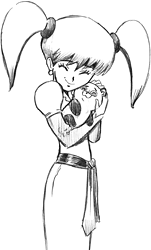 No doubt about it, “cute” is a favorite attribute of fans of cartoons and manga. It’s very important to be able to draw cute stuff; people love drawing cute characters. So, let’s get serious, for a moment, about cuteness! There are many techniques you can use to characters, such as drawing big eyes, big forehead, small mouths, wide cheeks, small chins, and so on. And I teach many of them in my book, “Cartoon Cute Animals”.
The most important technique is your gut feeling. Let yourself be guided by that part of your instinct that loves a puppy, or that melts when you see an adorable toddler. If your drawing doesn’t give you those warm feelings, try making another adjustment to it.
That’s the tip of the day!
by Christopher Hart | Jun 17, 2014 | Dragons, Tutorials
How to draw a Fantasy dragon classic pose.
Click the image to change to the next one in the series. Click Show Thumbnails to see small versions of all images.
[ngg_images gallery_ids=”2″ display_type=”photocrati-nextgen_basic_slideshow”]